
Summary:
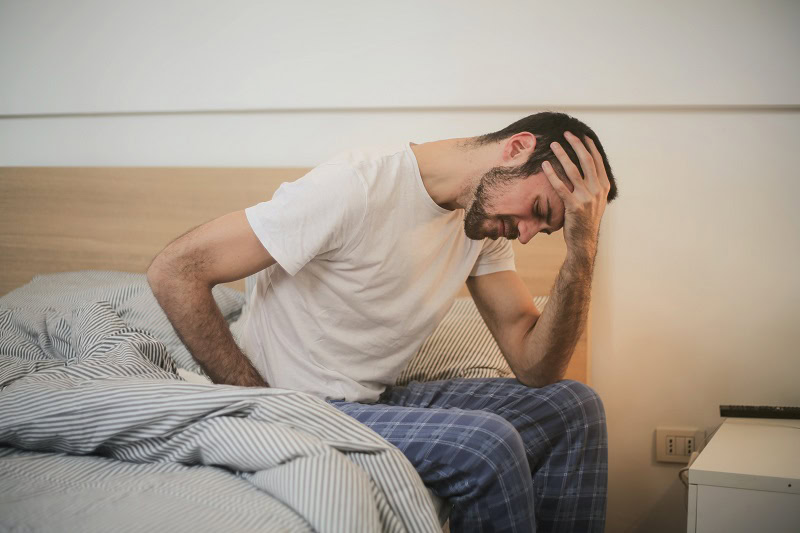
You know the feeling. The sky gets heavy, a front rolls in off Lake Michigan, and before the rain even starts, your head is already pounding. You’re not being dramatic. You’re not imagining a pattern that isn’t there. Barometric pressure headaches are a well-documented, physiologically real phenomenon — and in a place like Kent County, where the weather can flip three times before noon, they can feel relentless.
This page is going to walk you through why this happens, what you can do at home to get some relief, and what to do when home remedies just aren’t cutting it anymore.
What Causes Barometric Pressure Headaches and Why Kent County Makes Them Worse
Barometric pressure is the weight of the atmosphere pressing down on everything around you. When a storm system moves in, that pressure drops — and your body notices. The tissues, fluids, and air pockets inside your sinuses, inner ear, and spinal column all respond to that change. For people with a sensitive nervous system or underlying cervical tension, that response triggers pain.
Research published in peer-reviewed journals has found that weather changes are involved in roughly 20% of all migraine episodes, and over a third of migraine sufferers identify weather as one of their consistent triggers.
Grand Rapids sits about 30 miles east of Lake Michigan, which puts Kent County squarely in lake-effect territory. That means more frequent storm systems, faster pressure swings, and less of the gradual, predictable weather change that more inland areas experience. If it feels like your head is always reacting to something, that’s not a coincidence — it’s geography. The volatility of Kent County’s weather patterns creates conditions that are genuinely harder on weather-sensitive people than what most other regions deal with.
Natural Remedies for Barometric Pressure Headaches That Are Actually Worth Trying
There’s no shortage of advice online about managing weather headaches, and some of it is genuinely useful. The challenge is knowing which remedies address the actual mechanism — and which ones just take the edge off temporarily.
Hydration is one of the most consistently supported strategies. Dehydration lowers blood volume and makes your nervous system more reactive to pressure changes. Drinking water consistently throughout the day — not just when you feel thirsty — can meaningfully reduce headache frequency for weather-sensitive people. This isn’t a cure, but it’s a real contributing factor that’s easy to overlook.
Magnesium supplementation has solid research behind it for migraine prevention. Magnesium plays a role in nerve conduction and vascular tone, and many people who suffer from migraines are deficient in it. A daily magnesium supplement (typically magnesium glycinate or citrate for better absorption) is something worth discussing with a healthcare provider, especially if your headaches are frequent.
Caffeine is a double-edged tool. In small amounts, it can constrict blood vessels and relieve a headache in the early stages. But relying on it regularly can lead to rebound headaches, which only compound the problem. Use it strategically, not as a daily crutch.
Ginger — whether as a tea, capsule, or fresh — has anti-inflammatory properties and can help reduce nausea that often accompanies barometric pressure migraines. It won’t stop a headache already in full swing, but it can be a useful part of a prevention routine.
Keeping a headache diary is underrated. Tracking when your headaches occur, what the weather was doing, what you ate, how you slept, and how much water you drank gives you real data. Over time, patterns emerge that help you anticipate bad days and take preventive steps before the pain starts. Several weather apps now include barometric pressure readings, which makes this kind of tracking much more practical.
None of these remedies are magic. They work best as part of a consistent routine, and they work even better when you’ve also addressed the structural factors that make your nervous system overreact to pressure changes in the first place.
Home Remedies for a Headache That Won't Go Away — When the Basics Stop Working
There’s a specific kind of frustration that comes with a headache that just won’t budge. You’ve had water. You’ve taken ibuprofen. You’ve sat in a dark room. The storm outside is still going, and so is the pain. At that point, you’re not dealing with a simple tension headache — you’re dealing with something that standard remedies weren’t designed to address.
Cold therapy applied to the base of the skull or across the forehead can interrupt the pain signal and provide temporary relief. Heat on the neck and upper shoulders helps relax the muscle tension that often amplifies barometric headaches — especially if you spend significant time at a desk or in a car. The combination of cold on the head and heat on the neck is one of the more effective physical interventions for a headache that’s already taken hold.
Pressure point techniques — specifically applying firm pressure to the space between your thumb and index finger (the LI4 point) or to the base of your skull — have some evidence behind them for headache relief. They’re not going to resolve a severe migraine, but for moderate pain, they can take the edge off without adding more medication to the equation.
Lying down in a dark, quiet room with your neck properly supported (not propped up at an angle that strains your cervical spine) gives your nervous system a chance to settle. Screens make it worse — the light and the mental engagement both keep your brain in a heightened state when it needs the opposite.
Here’s the honest part: if you’re regularly reaching for these strategies, the issue isn’t that you haven’t found the right home remedy. The issue is that something in your body is making you unusually sensitive to barometric pressure changes — and no amount of ginger tea or cold packs fixes that underlying sensitivity. That’s where professional care enters the picture.
Upper cervical misalignment is one of the most common structural contributors to weather headache sensitivity. When the top two vertebrae in your neck are even slightly out of their optimal position, they can create tension in the surrounding tissues, interfere with normal cerebrospinal fluid dynamics, and amplify your nervous system’s response to external triggers — including pressure changes. Correcting that misalignment doesn’t just treat the headache you have today. It reduces how reactive your system is to the next storm that rolls through.
Chiropractic Treatment for Barometric Pressure Headaches in Kent County, MI
Chiropractic care isn’t the first thing most people think of when their head hurts before a storm. Most people associate it with back pain, and that’s understandable — but the spine and the nervous system don’t stop at your shoulders. The cervical spine, the brainstem, and the trigeminal nerve pathway are all involved in how your brain processes pain signals, including the ones triggered by pressure changes.
A 2001 report from the Duke University Evidence-Based Practice Center found that spinal manipulation significantly improved headache pain, particularly for headaches with a cervical component. That finding has held up across subsequent research, and it aligns with what we’ve seen clinically over more than 26 years of treating patients in the Kent County area.
The key is that not every headache patient needs the same approach. Identifying what’s actually driving the sensitivity — whether it’s upper cervical misalignment, soft tissue tension, postural strain from desk work, or some combination — is what makes the difference between care that works and care that doesn’t.
Fast Way to Relieve a Headache When It's Already Taken Hold
When a headache is already in full swing, the goal shifts from prevention to damage control. There are a few things that can move the needle quickly, and it helps to know which ones are worth reaching for first.
The fastest physiological intervention for most people is a combination of hydration and position change. If you’ve been sitting at a desk or driving — both of which create forward head posture and compress the cervical spine — getting up, moving around, and gently stretching the neck and upper back can release some of the tension that’s amplifying the pain. This isn’t a cure, but it can provide meaningful relief within 10 to 15 minutes for headaches that haven’t yet peaked.
OTC medications like ibuprofen or acetaminophen work best when taken early — at the first sign of a headache, not once it’s already severe. The problem with barometric pressure headaches specifically is that many people don’t recognize the early warning signs until the pain is already well established. Learning your personal prodrome — the subtle signals that a headache is coming — is one of the most practical things you can do to make medication more effective.
For people who’ve been managing weather headaches for years, the pattern often looks like this: the pressure drops, the headache comes, the medication dulls it slightly, and then it returns the next time the weather changes. That cycle repeats indefinitely because the medication is addressing the symptom, not the structural sensitivity underneath it. Chiropractic adjustments work differently — they’re aimed at reducing the baseline reactivity of your nervous system so that the same pressure drop that used to flatten you starts to have less of an effect over time.
We’ve worked with patients across Kent County who came in after years of this cycle, skeptical that anything could actually change it. For many of them, a few targeted adjustments made a noticeable difference within the first few weeks — not because chiropractic is a miracle, but because addressing the structural issue finally gave their nervous system room to regulate itself.
FAQs About Barometric Pressure Headaches From Kent County Patients
**Is a barometric pressure headache the same as a migraine?**
Not exactly, but there’s significant overlap. Barometric pressure is a trigger — it’s one of the environmental inputs that can set off a migraine in someone who is susceptible. A migraine is the type of headache; barometric pressure change is often the cause. Some people experience classic migraine symptoms (nausea, light sensitivity, aura) with weather changes. Others get a dull, persistent pressure-type pain that doesn’t meet the full migraine criteria but is still debilitating. The distinction matters for treatment, which is one reason a proper evaluation is more useful than self-diagnosing from a symptom list.
**Why do I get headaches when it rains in Kent County but not everywhere I’ve lived?**
This is a question we hear regularly from patients who’ve relocated to the area. Kent County’s proximity to Lake Michigan creates weather patterns that are genuinely more volatile than what most inland areas experience. Lake-effect systems move fast, pressure drops can be sharp, and the transition seasons here — especially spring and fall — bring some of the most dramatic barometric swings in the region. If you moved here from somewhere with more stable weather and your headaches got worse, the geography is a real factor, not a coincidence.
**Can chiropractic care actually help with weather-related headaches, or is it just for back pain?**
Chiropractic care is most commonly associated with back pain, but the cervical spine — your neck — is directly connected to the nervous system pathways involved in headache. Upper cervical misalignment is a well-documented contributor to headache frequency and intensity, and correcting it can reduce how sensitive your nervous system is to external triggers like pressure changes. It’s not a guarantee, and it’s not the right solution for every person. But for people whose headaches have a clear cervical component — stiffness in the neck, pain that starts at the base of the skull, headaches that worsen with prolonged sitting — chiropractic care is worth a serious look.
**What if I’ve tried chiropractic before and it didn’t help?**
It depends on what was evaluated and how it was treated. Not every chiropractic approach is the same, and a one-size-fits-all adjustment protocol is unlikely to address the specific structural pattern driving your weather sensitivity. We evaluate each patient individually before recommending any course of care — including on-site X-rays when needed — because the right technique for one person isn’t necessarily right for another. If a previous experience didn’t deliver results, that doesn’t mean chiropractic can’t help you. It may mean the approach wasn’t matched to what your body actually needed.
**How quickly will I notice a difference?**
Results vary, but many patients notice meaningful improvement within the first few visits. Some feel a difference after a single adjustment. Others need a few weeks of consistent care before the pattern shifts. The honest answer is that it depends on how long the structural issue has been present and how reactive your nervous system has become. What we can tell you is that most patients don’t have to wait months to know whether this approach is working for them.
When to Stop Managing Weather Headaches and Start Treating Them
Home remedies have their place. Staying hydrated, tracking your triggers, and knowing how to manage an acute headache are all genuinely useful skills. But if you’re in a cycle where every storm system that crosses Kent County puts you on the couch, that’s not a management problem — it’s a structural one.
The weather in West Michigan isn’t going to get more predictable. Lake Michigan isn’t moving. But your sensitivity to those pressure changes isn’t fixed either. Addressing the cervical tension and nervous system reactivity that amplifies your response to barometric shifts is the difference between dreading every forecast and actually living your life.
If you’re ready to find out whether your headaches have a structural component worth addressing, we’ve been working with patients in Kent County since 1998. A $37 new patient special makes the first step easy — and a real evaluation, not a generic protocol, is where it starts.
